The Cost of Friction: Why Transit Payment Modernization Can’t Wait
A bus can arrive on time.
The route can be optimized.
But if payment is slow or confusing, the journey has already started badly.
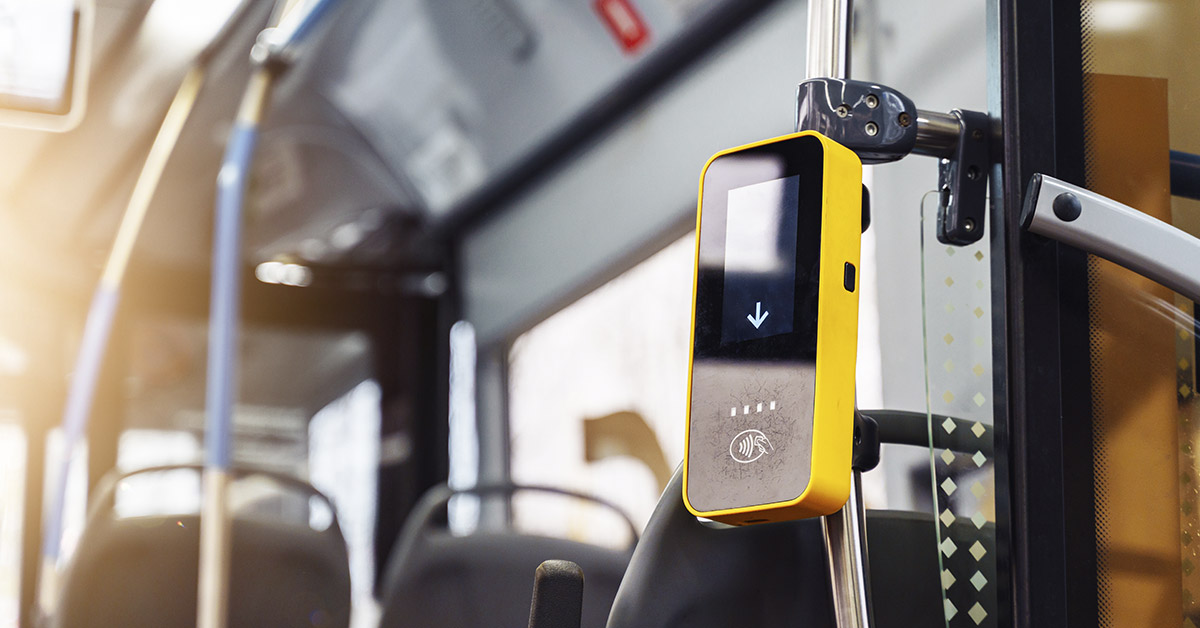
For many passengers, fare payment is their first real interaction with public transport. Searching for tickets, navigating complex fare rules, or waiting behind cash transactions creates friction before the trip even begins.
In a world where tap-to-pay is standard across retail, hospitality, and mobility services, friction at the transit gate feels outdated, and it shapes how riders perceive the entire network.
Expectations Have Shifted
According to Visa’s Future of Urban Mobility Survey, more than 94% of public transport users worldwide expect contactless fare payments as part of their transit experience. Nearly two-thirds expect to pay using their own bank card or prepaid transit card within the next year.
Additional research reported by NFCW and conducted by Visa found that 57% of riders cite faster, more efficient payment as a primary benefit of open-loop contactless systems, while nearly half highlight the ability to avoid cash.
Contactless in transit is no longer a differentiator. It is baseline infrastructure.
The Ridership and Revenue Case
The business case extends beyond convenience.
The Visa Economic Empowerment Institute’s report Reimagining Ridership: Open-loop Payments and the Future of Urban Mobility, based on surveys of 75 transit agencies and 3,000 riders globally, found that approximately 80% of agencies implementing open-loop contactless payments reported increased ridership. Agencies with more than two years of deployment experience saw average ridership increases of around 10%.
Faster boarding reduces dwell time. Reduced cash handling lowers operational costs and revenue leakage. Improved transaction data enhances service planning and forecasting.
Modern fare systems influence both perception and performance.
A Strategic Decision: Not Just a Technology Upgrade
For transit executives, payment modernization is not simply a system enhancement it is a strategic decision that affects:
- Customer accessibility and brand perception
- Network throughput and boarding efficiency
- Revenue protection and operational costs
- Multimodal integration and mobility-as-a-service readiness
- Data visibility for long-term planning
Implementation, however, requires discipline. Legacy architecture integration, governance, cost control, and rider equity must all be addressed. Academic analysis consistently highlights the need to ensure unbanked and underbanked populations are included in any open-loop strategy.
Contactless alone is not a silver bullet. But postponing modernization risks widening the gap between passenger expectations and system capability.
When deployed within an account-based framework enabling fare capping, concessions management, and multimodal integration contactless becomes foundational to future-ready transit strategy.
How Enghouse Transportation Enables Modern Fare Strategy
Enghouse Transportation supports transit agencies in modernizing fare collection through integrated digital ticketing and open-loop contactless payment solutions designed to align operational control with passenger experience.
Our platforms connect payment systems with:
- Real-time passenger information
- Journey planning applications
- Account-based ticketing environments
- Operational analytics and revenue intelligence
The objective is not simply faster transactions. It is unified data visibility, scalable architecture, and a payment ecosystem that supports future mobility expansion.
The question is no longer whether contactless belongs in transit.
The strategic question is how quickly agencies can implement it in a way that is inclusive, resilient, and future-ready.
Continuing the Discussion
Open-loop payments and integrated digital fare strategies will be central themes at Transport Ticketing Global 2026 in London.
Enghouse Transportation will be exhibiting at booth F42. If you are planning your modernization roadmap or evaluating next-generation fare systems, we welcome the opportunity to continue the conversation.
Book a meeting here: https://discover.enghousetransportation.com/transport-ticketing-global-2026-sf/