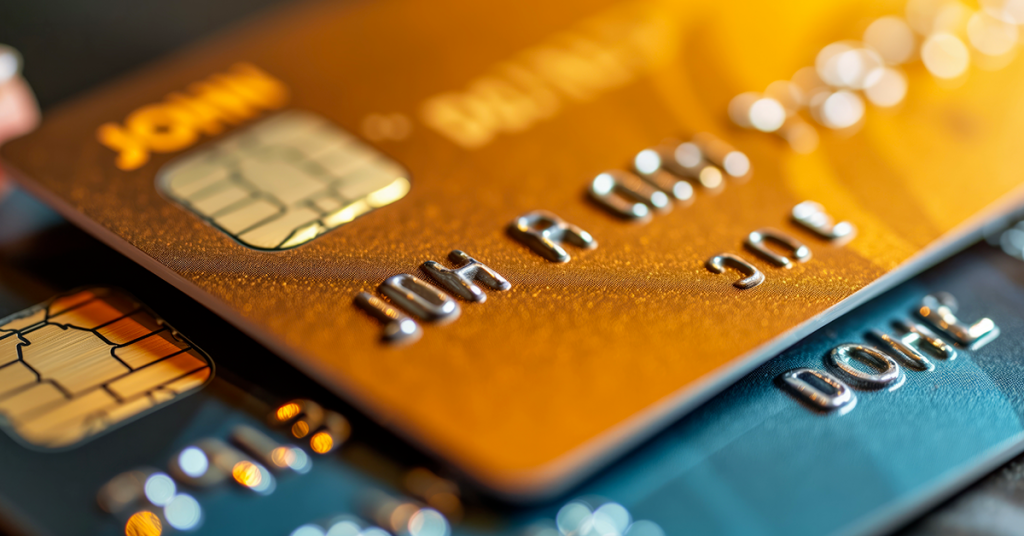
The global Covid-19 pandemic created a seismic shift in world economies, changing the way people make payments. For health reasons, many industries turned to contactless payment systems to limit the spread of the virus. Many industries were affected, including the way consumers pay for everything from fuel for their vehicles and meals from fast food restaurants and snacks from convenience stores. The transit industry also saw the acceleration of the use of contactless EMV (Eurocard, Mastercard, Visa) cards by commuters using trains and buses.
How do these cards work?
“Contactless payment” refers to a no-touch or tap-to-pay form of payment using a credit or debit card on a point-of-sale system equipped with the associated technology. Contactless-chip equipped cards use radio frequency identification (RFID) technology and near-field communication (NFC) to process transactions.
Many credit and debit cards now have chips built in that allow customers to insert rather than “swipe” to make a payment. Contactless cards feature chips that enable the tap-and-go and tap-to-pay features that are up to 10 times faster than other forms of payment.
Contactless cards have a small, embedded chip that emits electromagnetic waves. When a contactless card is placed within proximity to a payment terminal, the payment information is transferred.
The advent of contactless payment cards is proving to be a boon for the transit industry.
Toofan Otaredian, VP of Enghouse Transportation, says the growth in contactless payments in transit agencies means customers no longer must sign up for “closed loop” payment systems that require commuters to enroll in a transit agency’s proprietary payment card program.
Conversely, EMV cards that are compatible with “open loop” payments and transits using open loop technology allow transit riders to pay their fare with a tap from their EMV card and move onto the bus or train.
“It’s like when you go to the casino and buy chips. They can only be used in that casino. Closed loop systems are like that. With open loop systems you don’t need that transit agency’s card to use transit,” said Otaredian.
Enghouse Transportation provides an open loop software solution that enables transit agencies to make the transition from closed loop to open loop systems. Proven in European markets, Enghouse Transportation has brought the technology solution to North America (https://www.enghousetransportation.com)
The use of EMV and contactless EMV cards is skyrocketing around the globe. According to EMVCo, there were 12.8 billion EMV chip cards in circulation at the end of 2022, a seven percent increase from the year before.
EMVCo’s Joy Huang said, “As consumers continue to move away from cash and towards digital payments, we are collaborating with merchants, issuers, acquirers, payment networks, financial institutions, and technology solution providers to evolve the EMV specifications to support the next generation of payments. This engagement underpins our work to extend the benefits of EMV chip technology to address emerging use-cases spanning the mass transit, automotive and IoT sectors, as well as initiatives to promote increased consistency across biometric payment cards and the use of consumer mobile devices for contactless payment acceptance.”
Otaredian said there are three major advantages to using contactless cards:
Speed: Using a tap-and-pay contactless chip card can take only seconds. In the busy hustle and bustle world of many commuters, those seconds saved paying their fare can make a difference in a morning commute.
Reduced Contact with Public Surfaces: As we have learned, Covid-19 is still with us. Reduced contact with public surfaces has become a health benefit in an unprecedented manner.
Less Wear-and-Tear: Magnetic strips and standard EMV chips can wear out from repeated contact with payment terminals. Contactless chips, by nature, won’t experience the same deterioration and should last for years.
Major banking and credit card companies now issuing contactless cards by default include American Express, Bank of America, Capital One, Chase and Citi. In 2022, more than 93 percent of card payments worldwide were made using EMV chip cards.
With a vast experience in implementing AFC systems in different cities and regions, Enghouse Transportation solutions can address any concerns you have and ensure that the process is as swift and cost-effective as possible.
Speak to our business development representative directly if you have any questions at Ana.Stanca@enghouse.com.