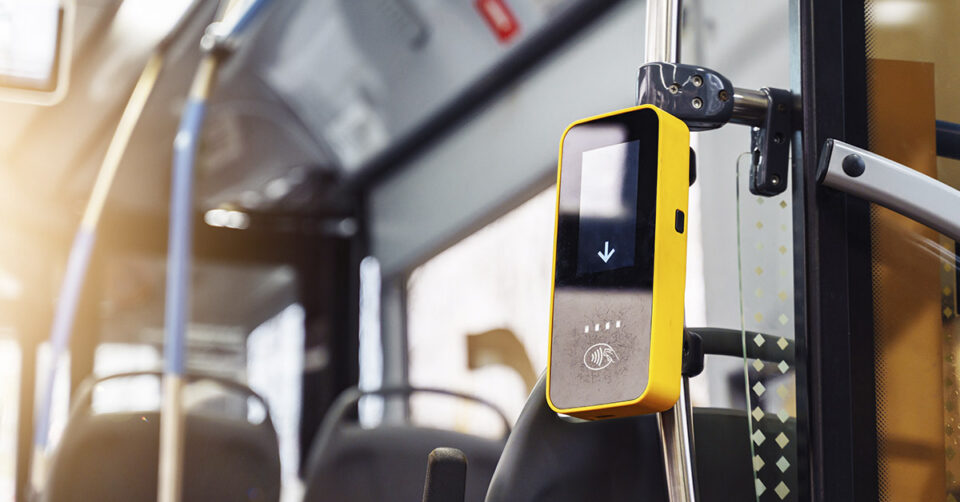
It’s 7:42 a.m. The bus is late.
The display reads: 3 minutes away.
Passengers wait calmly.
Now imagine the same delay but no updates, no countdown clock, no app notification. Just uncertainty.
The delay hasn’t changed. The experience has.
For decades, on-time performance has been the industry’s benchmark for reliability. But passengers don’t experience reliability as a percentage. They experience it as certainty or ambiguity in a given moment.
The Psychology of Waiting
Research from MIT’s Real-Time Transit Research Initiative shows that real-time arrival information reduces perceived waiting time and passenger stress, even when delays occur. Studies published in Transportation Research Part C and by Springer similarly link accurate real-time passenger information to higher rider satisfaction and trust particularly during service disruptions.
The insight is simple: passengers tolerate delays better than uncertainty.
An agency may report 84% on-time performance. But if riders don’t know whether their bus is arriving in two minutes or twenty, the system feels unreliable regardless of the KPI.
Reliability, in practice, is a communication outcome as much as an operational one.
When Real-Time Fails
Real-time builds trust only when it is accurate.
Inconsistent predictions, fragmented data feeds, or disconnected operational systems can amplify frustration. A countdown that jumps from “2 minutes” to “8 minutes” erodes credibility faster than silence.
This is why some agencies continue to prioritize traditional punctuality metrics. Delivering dependable real-time information requires clean data architecture, integrated systems, and operational discipline.
But passenger expectations have already shifted. Transparency is no longer a value-add it is a baseline expectation.