Bus transit is a vital lifeline for many riders in small and midsized communities, but keeping such systems on the road has become increasingly challenging in the past few years. Transit leaders face two competing demands: They must keep costs low while keeping service levels high enough to raise ridership.
Enghouse Transportation is committed to designing turnkey transit fare solutions that simplify the payment process. To this end, we have developed a family of solutions that meet both needs. Automated fare collection (AFC) systems make transit service more accessible for riders while drastically lowering its cost and complexity.
To better serve small and midsized communities concerned about upfront costs, Enghouse created scaled-down, retail-inspired payment systems that offer the advantages of streamlined AFC while preserving the ability to add features and fully scale as an agency desires.
One challenge for transit leaders is keeping these existing customers while attracting new riders. The latter may be those who would use transit for sporadic shopping trips, who want to reduce the number of cars they own, or who would just prefer to use transit for other health and environmental reasons. But understanding fares — and getting set up with a proprietary payment system — can be an obstacle for new customers. Many people simply aren’t willing to learn about the system’s fare rules and don’t want to buy a separate card they must keep loaded with funds.
Some bus systems also accept cash onboard, but that comes with its own set of problems. A growing number of people do not regularly carry cash, and the need to make change or produce exact change can significantly slow boarding times. Additionally, the presence of a cash box can make buses a target for crime. Operators should be freed up to focus on safe and on-time operations, not fare collection.
Clearly, small bus transit systems need a modern, safe, practical, and cost-effective approach to fare collection.
Future-proof entry points into AFC
Automated fare collection offers passengers an easy, familiar way to pay on an unfamiliar transit system. It uses a payment model similar to those used in retail outlets.
AFC also can enable a host of back-office technological innovations for larger transit systems, such as trip tracking, automated monthly billing, and rewards and incentives programs. Many small to midsized systems might not need all those options or cannot afford them upfront.
That’s why Enghouse developed the best of both worlds with three easy-to-implement, entry-level offerings that improve safety, reduce dwell times, and simplify payments — while retaining the option to add features as the agency’s budget or ridership levels allow. Here is a rundown of each:
The Payer Solution
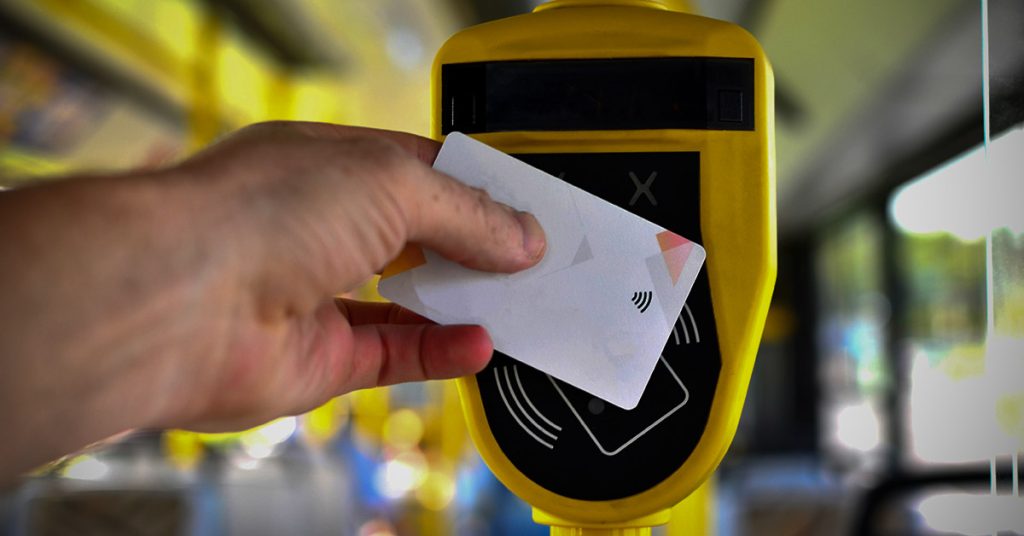
This solution provides retail-inspired touchscreen payment devices that are fixed to each bus. Passengers tap in their travel selection and then pay with a credit card, a mobile payment modality such as Apple Pay or Google Pay, or a transit gift card purchased at a retail outlet. It’s a budget-friendly, no-frills solution that provides all the benefits of fast transaction processing and streamlined payments.
The Retail-in-Transit Model
This payment system offers a validator with a traditional public transportation look. It also accepts credit cards, mobile payments, or transit payment cards. It features a larger screen, cost-effective processing, and is easy to upgrade to Enghouse’s other solutions.
Future-proof entry points into AFC
Automated fare collection offers passengers an easy, familiar way to pay on an unfamiliar transit system. It uses a payment model similar to those used in retail outlets.
AFC also can enable a host of back-office technological innovations for larger transit systems, such as trip tracking, automated monthly billing, and rewards and incentives programs. Many small to midsized systems might not need all those options or cannot afford them upfront.
That’s why Enghouse developed the best of both worlds with three easy-to-implement, entry-level offerings that improve safety, reduce dwell times, and simplify payments — while retaining the option to add features as the agency’s budget or ridership levels allow. Here is a rundown of each:
The Payer Solution
This solution provides retail-inspired touchscreen payment devices that are fixed to each bus. Passengers tap in their travel selection and then pay with a credit card, a mobile payment modality such as Apple Pay or Google Pay, or a transit gift card purchased at a retail outlet. It’s a budget-friendly, no-frills solution that provides all the benefits of fast transaction processing and streamlined payments.
The Retail-in-Transit Model
This payment system offers a validator with a traditional public transportation look. It also accepts credit cards, mobile payments, or transit payment cards. It features a larger screen, cost-effective processing, and is easy to upgrade to Enghouse’s other solutions.
Transit Model with Fare Capping
This is an excellent solution if a bus system uses—or would like to implement—fare capping. It has the same features as the Retail-in-Transit Model but includes a rider portal that enables discounted transfers and fare capping.
How AFC benefits transit operators
AFC is an innovative, resilient technology that offers a host of immediate benefits to transit agencies. They include:
Transit agencies can collect fares efficiently without having to manage their own proprietary payment infrastructure. By reducing the need for manual fare collection processes such as ticket vending machines or inspectors, agencies can realize significant labor and operational expense savings.
Automated fare collection systems are resistant to fare evasion and fraud. Bus operators also have screens to monitor transactions easily as passengers board. This helps agencies protect their revenue streams and ensures all passengers pay their fair share.
Simplified fare payments make it easier and more convenient for passengers to use public transit. This can lead to increased ridership and greater overall satisfaction with the transit system.
AFC improves safety because drivers don’t have to carry cash and have more time to focus on bus operations.
By offering multiple payment options, AFC makes public transit more accessible to a broader range of passengers, including those who may not carry cash or prefer digital transactions.
How AFC benefits riders
Passengers will also appreciate the simplicity and flexibility of automated fare collection. Passenger benefits include:
Ease of use. AFC is intuitive for riders — it’s the same type of interface they would use at the grocery store.
It works with various payment options, so passengers can pay with whatever method they’re used to and don’t need to purchase and carry a separate card or paper ticket.
“Unbanked” riders without credit cards or smartphones can use cash to buy transit payment cards in retail outlets.
The payment transaction happens exceptionally quickly — riders can tap and go.
Bus systems with automated fare collection have reduced dwell times and are more likely to run on time.
Ready to get started with AFC?
These AFC systems are fast to implement and easy to upgrade, making them the perfect answer for small and midsized transit systems looking for innovative solutions to enhance their services, reduce costs, and drive loyal ridership.
Enghouse Transportation is committed to providing efficient technology solutions to the transit market. Request a demo today to see how Enghouse can help make your system more efficient and streamlined.