For better or worse, the next 12 months could be a turning point for transit. With federal COVID aid expected to end by the summer of 2024, many American transit agencies face critical budget shortfalls. Without additional subsidies or drastic increases in ridership, they may find themselves in the “death spiral” of service reductions.
To reverse the direction of this spiral, transit agencies must focus on increasing ridership. In theory, community transit enjoys widespread public support. In practice, just 3.1% of Americans use public transit, even lower outside large metro areas. With so much runway for ridership growth, transit agencies should invest their efforts — and budgets — in new opportunities to attract and retain riders.
Here are five technology-focused solutions that improve the overall transit experience and help to get more new and infrequent riders onboard.
1. Solve the accessibility problem.
A transit trip doesn’t begin at the nearest station or stop — it starts at the passenger’s front door.
First- and last-mile (FLM) solutions are vital for increasing transit catchment and opening a system to more rural and suburban areas. But unfamiliarity with the various new forms of transport and the inconvenience of changing modes still deters many passengers.
One solution is to bring multiple transit modes, in addition to parking, under the same umbrella through smartphone app integration. This technology allows customers to plan and pay for their entire trip in one place, including rideshare (e.g., Uber and Lyft), scooters, bicycles, shuttles, or a park-and-ride lot.
This approach also allows multimodal pricing discounts and other incentives, making trips that use multiple transportation partners feel like one seamless door-to-door experience.
2. Promote green travel.
Of all the benefits of mass transit, one best understood by the public is its environmental impact. Many people are enthusiastic about reducing waste, carbon emissions, urban congestion, and pollution — even as they’re idling in a traffic jam.
Reminding drivers about the tangible social benefit of a decision to choose transit instead can increase their interest and loyalty. For example, a smartphone app can let transit passengers know how many vehicle miles and how much CO2 they’ve saved by riding a light rail or a battery-electric bus. It can also turn that data into a competition among riders in the same city, naming, for example, a “green citizen of the month” and celebrating them on social media.
Mutually beneficial employer partnerships can strengthen such campaigns through tangible rewards that emphasize their role in making their community a better place to live. For example, if taking 15 transit trips a month earns a rider a “green bonus” in their workplace, they are not likely to stop riding after 10.
3. Introduce mobile ticketing.
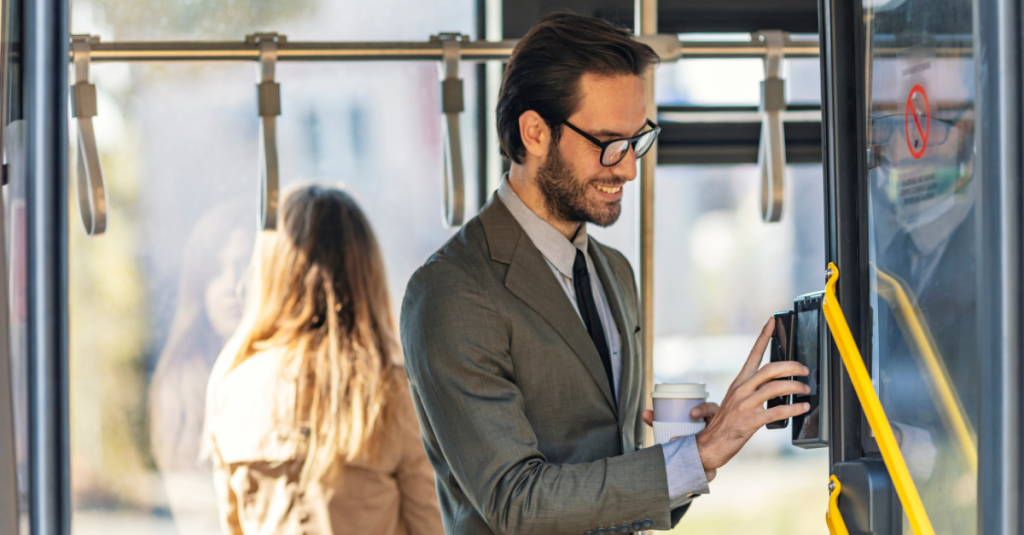
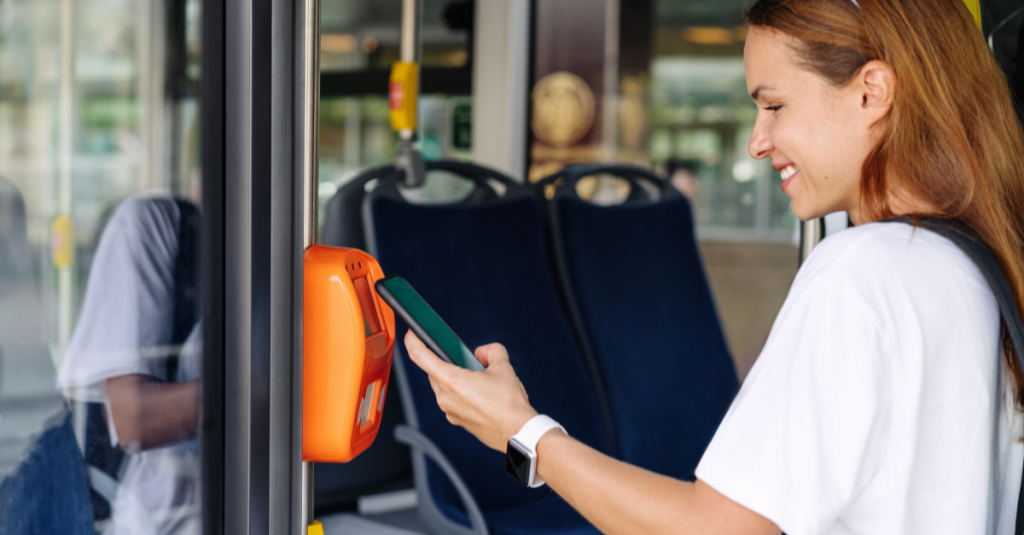
Transit systems in North America typically require passengers to purchase a transit-specific card to ride, which causes friction and confusion, especially for people new to the system. There are several ridership-boosting advantages to switching to mobile ticketing, allowing passengers to tap into transit with their credit cards, debit cards, or smart devices.
Passengers are already familiar with how to pay through these methods, even in an unfamiliar transit system. And they won’t have to change their mode of payment if they’re entering the system from, for example, a park-and-ride lot or a rideshare.
With mobile ticketing, each passenger has a back-office account, which makes it easy for an agency to automatically apply its fare rules, such as student or senior discounts. Account-based ticketing also enables fare capping, assuring riders they always get the best fare deal available.
4. Focus on customer service.
When transit customers have a question or an issue with their trip, they want service immediately. However, transit agencies have limited customer service agents, and these employees can easily get overwhelmed during a storm or another event that disrupts service. Questions may also come in via social media or other platforms that are not continuously monitored.
Contact center as a service (CCaaS) is a centralized, scalable, cloud-based solution that lets customers instantly get the answers they need while vastly increasing the efficiency of the customer service center. The software centralizes requests from all platforms — voice, email, chat, SMS, and social media — so it doesn’t matter where customers are or how they choose to reach the transit system.
For even greater efficiency, CCaaS applications can also use AI-driven analytics to understand customers’ travel habits and concerns and instantly get them the answers they need with trainable “virtual agents.”
5. Lean into rewards and incentives.
Customer loyalty programs create a sense of appreciation and connection, strengthening the bond between the transit agency and its riders — and potentially other parties.
With account-based ticketing, agencies can quickly implement any reward system that interests them — for example, offering a discount at a park-and-ride lot for frequent commuters or making every fifth transit trip free.
Corporate partnerships can enable large employers to offer free transit as a workplace benefit, which can be billed to the company through a single invoice at the end of the month. Employers can also enable transit commuters to begin their workday the moment they come aboard, paying them to make the environmentally friendly choice rather than wasting time in rush-hour traffic.
Finally, creating third-party partnership rewards opens up even more intriguing possibilities, potentially at little or no cost to the agencies. For example, a grocery store or coffee shop near a transit stop might offer customers a discount or a freebie after every 30 transit taps. Or a stadium might allow patrons who arrive by transit to enter through a special “fast lane” rather than waiting at the end of the line.
Transit customers who opt into such loyalty programs and share some personal information could even receive targeted offers and rewards individualized to their preferences.
Unlock new ways of thinking about ridership
Higher transit ridership is good news for everyone in a community and on the planet. Today’s technology offers unlimited options for improving the transit experience and attracting new riders, enabling a virtuous circle of more revenue, services, and even greater ridership.
Best of all, these software solutions are easy to adapt to each agency’s size, needs, and budget. They can be plugged in, evaluated, altered, or removed as desired.
Enghouse Transportation has nearly 25 years of experience providing technologically advanced solutions and innovations to the transit market. To see how Enghouse can turn your agency’s ridership ideas into reality, request a demo today or email infoET@enghouse.com.