Paper tickets and cash fares have largely been replaced by proprietary transit fare card systems, but not everywhere. Many small and midsized bus agencies are still clinging to “the old ways.”
These days, even those card systems need to be updated. These technologies were all appropriate for their time. Still, today, there’s a better way to pay that offers fast, low-entry boarding without agencies needing to maintain a separate payment infrastructure: AFC.
Automated fare collection — how it works
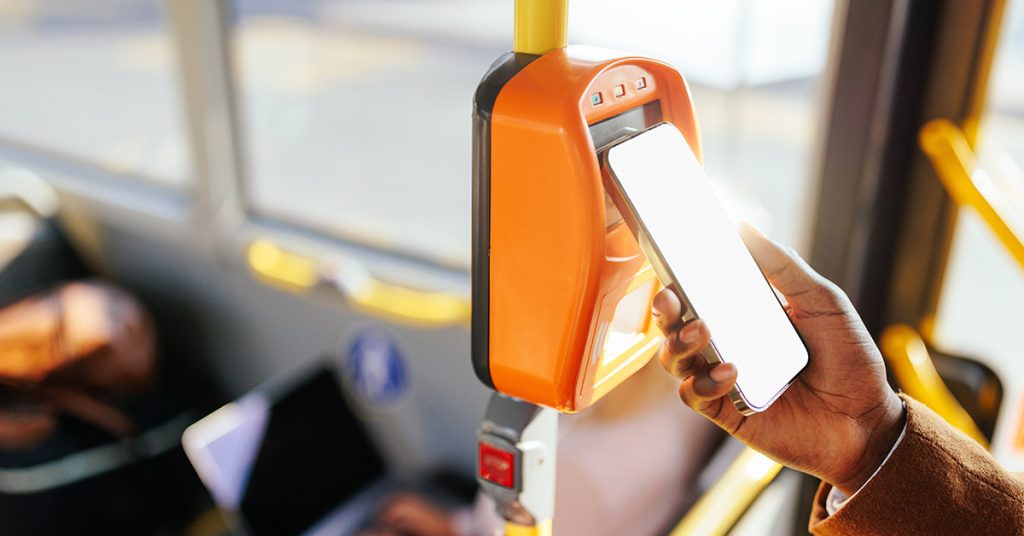
Automated fare collection (AFC) is the simplest payment solution for riders, bus operators, and transit systems alike. It consists of payment acceptance devices fixed to the buses that accept the same credit cards and mobile payments that consumers regularly use for purchases at stores and restaurants. (Unbanked passengers without credit cards or mobile phones can still pay with cash or use cash to purchase transit “gift cards” at local retailers.) This allows operators and transit agencies to get out of the payments business and focus on what they do best: moving passengers.
AFC systems range from basic to complex. Specialized features like trip tracking, automated monthly billing, and rewards and incentive programs are beneficial, but smaller agencies can opt for simple, entry-level payment solutions.
These low-cost solutions include touchscreen payment devices or validators that let passengers choose their trip option and then pay with a tap of their card or phone. The systems can integrate with existing transit infrastructure and are easy to upgrade if the agency decides to add more functionality down the road.
Here are five reasons why small and midsized transit bus systems can benefit from upgrading their systems to automated fare collection.
1. Cost-effectiveness
Automated fare collection is typically less expensive than a system of paper tickets or transit cards — and with modern payment technologies, boarding is just as fast or even faster.
Proprietary ticketing systems are expensive, requiring agencies to issue, stock, and replace their branded cards and manage the vending infrastructure. They also tend to be short-lived, lasting only about seven to 10 years on average.
Using AFC means that banks and mobile phone companies—not the transit agency—produce and manage payment media, sales, and distribution infrastructure. Of course, this comes with a small cost in the form of interchange fees, but there are ways to lower these fees, including aggregating payments and negotiating directly with payment providers.
2. Convenience for customers
A typical transit agency that uses a proprietary card or paper ticket fare system may unwittingly throw obstacles in the way of new customers. These systems burden passengers to understand how the fare system works, to know how to buy a card or ticket, to remember to bring the fare media onboard, and potentially to keep it loaded with funds. It also requires multimodal travelers to change to different payment media as they move between modes.
Cash can be more straightforward, but in this digital age, many people don’t regularly carry cash with them. The need to either produce exact change or wait for a bus driver to make change can significantly slow boarding.
AFC removes these obstacles, letting customers buy transit access in exactly the same way they buy everything else. With cards and mobile devices tied into the banking system, there’s never a need to “top them off” or to deal with change. Many systems require no more than a tap of a card or phone to the validator, and the customer takes their seat with barely a pause.
3. Rapid deployment and ease of implementation
A great feature of modern digital fare systems is that they have off-the-shelf components and a low barrier to entry. They can be seamlessly integrated with existing systems — and providers like Enghouse Transportation have decades of experience working with transit systems across Europe and North America to help agencies make the transition smoothly, quickly, and with minimal disruption.
Best of all, these systems are future-proof. They can be upgraded with innovative and useful account-based features such as fare capping, trip tracking, rewards and incentives, advertising partnership opportunities, and automated monthly billing. They can also be integrated with an agency’s existing mobile app or used with the Transit app.
4. Increased operator satisfaction
AFC systems make things easy for bus operators, allowing them to monitor fare interactions on their screens passively. They simply need to verify that the paying passenger has chosen the correct number of tickets for their party — no more making change or verifying ticket authenticity. In an age of heightened awareness about virus spread, many operators will appreciate not having to handle cash and tickets that other people have touched.
On top of that, the presence of a cash box comes with additional duties at the end of a shift and can even make buses targets for violent crime. Removing these burdens may lead to higher operator satisfaction and retention rates.
5. Higher profits for bus companies
All the advantages of AFC ultimately lead to higher profitability for bus transit agencies. Consider the variety of benefits that agencies can achieve:
Improved retention of skilled operators. AFC enhances safety by reducing the amount of cash aboard the bus. It also improves operator satisfaction by giving drivers more time to focus on their most important responsibilities.
Increased efficiency. Removing friction from the moment of payment makes boarding lines move more quickly and improves dwell times. This makes the system run faster and more reliably, reducing fuel usage and eliminating a key frustration for riders.
Higher ridership and rider satisfaction. By removing a key obstacle to understanding the transit system, AFC lowers the barrier to entry for new and infrequent riders. Faster, more modern boarding and shorter dwell times also lead to happier passengers, which increases ridership in the long run.
Low initial cost and easy installation. Enghouse’s solutions for small and midsized agencies provide a simple and reliable way for bus agencies to reap all the benefits of AFC with minimal upfront cost and hassle.
The ability to grow with your agency. Whenever they’re ready, transit providers can easily add features that further improve profitability and increase rider satisfaction.
Modern transit systems for modern cities
Today’s technology enables fare systems that save money while driving ridership and providing a premium, modern riding experience. It’s ultimately a step toward fulfilling the promise of transit: cleaner air, improved access and mobility, and more livable cities for everyone.
Enghouse Transportation has provided technology solutions to the transit market for 35 years. Request a demo today to see how Enghouse can help your system upgrade to modern, efficient fare collection.